In most cases, your teen does not have to fall behind in school during residential treatment, because a quality program runs an accredited school on site with in-person teachers. While your child is in treatment, they keep attending class every weekday, working through core academics aligned to state requirements, and earning credits that transfer back to their home school. The school day is built into the therapeutic schedule so learning and clinical care reinforce each other. This article explains how on-site academics work during residential treatment, what a typical school day looks like, and how to make sure credits count when your teen comes home.
Key Takeaways
- A residential program with an accredited on-site school keeps your teen in class daily, so school does not stop while treatment happens.
- On-site academics are taught in person by teachers and aligned to state requirements, not left to self-paced worksheets.
- Small classes and a structured routine often help teens who were already struggling in a traditional school setting.
- The academic team coordinates with your home district so earned credits and competencies transfer back cleanly.
- Ask any program how it keeps students current, documents credits, and plans the return to school.
Will My Teen Really Fall Behind?
This is one of the first practical fears parents name, and it is a fair one. Your child’s education matters, and the idea of months away from school can feel like another loss stacked on top of an already hard season. The reassuring answer is that learning continues in a well-run residential program. The key is the program’s school, so the question to ask is not whether your teen will attend class, but how the school is structured and whether credits will count.
It helps to remember why families consider residential care in the first place. For many teens, school was already part of the struggle, whether through anxiety, school refusal, or emotional dysregulation that made a regular classroom feel impossible. The Centers for Disease Control and Prevention reports that an estimated 11% of children ages 3 to 17 had current diagnosed anxiety based on 2022 to 2023 data, and the National Institute of Mental Health notes that the earlier treatment starts, the more effective it can be. A program that pairs treatment with school can address the thing that was getting in the way of learning in the first place.
How On-Site Academics Work During Residential Treatment
On-site academics during residential treatment mean your teen attends a school located on the treatment campus, staffed by teachers, with classes that count toward graduation. The school is integrated with clinical care so the two support each other rather than compete for your child’s day.
An Accredited School, Not a Workbook
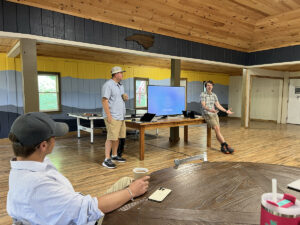
The difference between a real school and a stack of worksheets is significant. At BlueRock Behavioral Health, students attend Bearwallow Academy, an accredited on-campus school where classes are taught in person by dedicated teachers and aligned to North Carolina requirements. Accreditation and state alignment are what make the work transferable, so your teen is earning real credit rather than just staying busy.
Small Classes and Individualized Pacing
Class size shapes how much a student actually learns. Smaller classes let teachers meet a teen where they are, which matters when a student arrives with gaps from missed school or a learning difference. The CDC notes that early diagnosis and access to services can make a difference for children with mental health conditions, and a small, structured classroom is one place that support shows up. At BlueRock, teachers use direct instruction, guided practice, and hands-on learning, and they coordinate lesson plans with each student’s individual goals.
Academics and Therapy on the Same Schedule
In a residential setting, the school day and the treatment day are woven together. Teachers and clinicians work from a shared picture of the student, so a teen who is having a hard morning in therapy has teachers who understand the context. At BlueRock, a typical day includes morning check-ins, core academics, time for gym, arts, or electives, and study hall integrated with therapeutic groups. That structure gives the day a predictable rhythm, which itself helps a dysregulated teen settle into learning.
What a School Day Looks Like in Treatment
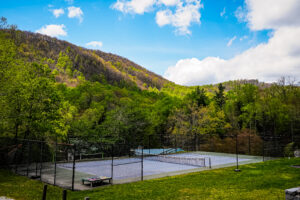
Parents often picture residential treatment as therapy from morning to night, with school squeezed in. The reality is closer to a full school day held inside a therapeutic community. Students start with a check-in, move into core subjects like English, math, science, and history, and have time for electives and physical activity. Study hall is built in so students get support finishing their work rather than carrying it alone. Because the campus is organized with separate spaces for learning, clinical work, dining, and recreation, the school day has a clear beginning and end, much like it would at home.
BlueRock sits in the Blue Ridge foothills of Western North Carolina, and time outdoors and away from screens is part of the daily structure. For a teen who had been spending most of their hours on a phone, a routine that moves between the classroom, clinical work, and the outdoors can be a meaningful reset on its own.
Making Sure Credits Transfer Back Home
The school day only pays off if the credits count when your teen returns, so this is the part to confirm with any program. A strong academic team does not wait until discharge to think about it. At BlueRock, the academic team coordinates with each student’s home school district throughout the stay, aligning syllabi, mapping credits, and providing documentation so earned credits and competencies transfer cleanly. That coordination is what keeps your teen on track toward grade level and graduation.
Re-entry is its own piece of the puzzle, and it works best when it is planned rather than improvised. We cover the details in our guides on credit transfer and graduation planning after residential treatment and school re-entry after residential treatment. If your teen has an IEP or 504 plan, our overview of IEP and 504 plans for teen mental health in North Carolina explains how those supports fit into the picture.
Why On-Site School Can Help, Not Just Hold the Line
For some teens, the on-site school does more than prevent lost time. A smaller classroom, a predictable routine, and teachers who understand what a student is working through clinically can rebuild a relationship with school that had broken down. When school had become a source of dread, a setting designed around regulation and support can make learning feel possible again. The goal is not only that your teen keeps up, but that they leave treatment more ready to handle a classroom than when they arrived.
Consider a teen whose anxiety had turned every morning into a battle over going to school. In a residential setting, that same student attends class steps away from the clinical team, with study hall built in and teachers who know what triggered the avoidance in the first place. Over weeks, showing up to class becomes ordinary again. That kind of repair is hard to engineer in a traditional school, where the pressures that caused the breakdown are still in place. The National Institute of Mental Health emphasizes that supportive, consistent care helps young people recover, and a school built into that care is one of the clearest examples of it.
Frequently Asked Questions
Will My Teen Fall Behind in School During Residential Treatment?
Typically not, as long as the program runs an accredited school on site. Your teen attends class every weekday, earns credits aligned to state requirements, and the academic team coordinates with the home district so the work transfers back. Ask any program you consider how it keeps students current and how it documents earned credits.
Is the On-Site School Accredited?
A quality residential program uses an accredited school so that credits transfer. At BlueRock, students attend Bearwallow Academy, an accredited on-campus school with in-person teachers and academics aligned to North Carolina requirements. Accreditation and state alignment are what make the credits count toward graduation back home.
How Many Hours of School Does a Teen Get in Treatment?
Students attend a structured school day built into the treatment schedule rather than a few scattered hours. At BlueRock, a typical day includes morning check-ins, core academics, electives or physical activity, and study hall, so school is a consistent daily part of life on campus. Ask each program to describe its daily academic schedule so you know what to expect.
Can My Teen Keep Up With Their Home School Curriculum?
Yes, when the on-site school coordinates with your home district. At BlueRock, teachers align lesson plans and syllabi with the student’s home school and individual goals, and they map credits throughout the stay. That coordination keeps your teen moving toward grade level and graduation while in treatment.
What Happens to Credits When My Teen Comes Home?
Credits earned in an accredited on-site school transfer to your teen’s home district when the program documents them properly. BlueRock provides documentation and works with the home school district on transcript coordination and credit mapping before discharge. You can read more in our guide to credit transfer and graduation planning after residential treatment.
What If My Teen Has an IEP or 504 Plan?
An existing IEP or 504 plan still matters during residential treatment, and a good program plans around it. At BlueRock, the academic team coordinates with the home district, which is where IEP and 504 supports live. Our overview of IEP and 504 plans for teen mental health in North Carolina explains how those supports carry over.
Talk to BlueRock About Your Teen’s Education
If part of what is keeping you up at night is your child’s education, you are asking exactly the right question. BlueRock Behavioral Health pairs trauma-informed, attachment-based residential treatment with Bearwallow Academy, an accredited on-campus school that keeps adolescent males ages 14 to 17 on track while they heal. We are a CARF accredited, North Carolina Medicaid Level II program in the Blue Ridge foothills at 41 Heros Way, Hendersonville, NC 28792, and we accept NC Medicaid Standard and Tailored Plans. Call us at (828) 845-8454 to ask how our academic team would coordinate with your teen’s school. No child is beyond help, and your teen can keep growing as a student while they get the support they need.
Crisis and Emergency Resources
If you or someone you know is in a substance use or mental health crisis, help is available now. Contact the SAMHSA National Helpline at 1-800-662-HELP (4357) for free, confidential treatment referrals 24/7. Reach the 988 Suicide and Crisis Lifeline by calling or texting 988. The Crisis Text Line is available by texting HOME to 741741. For emergencies, call 911.