When your teen is struggling and you don’t know where to turn, looking for help can feel like stepping into the unknown. Some parents still picture the children’s mental institutions of old movies, with locked doors and long, cold hallways. Today’s teen mental health facilities in North Carolina look very different, from weekly outpatient therapy to 24-hour residential programs built for different levels of need. Choosing the right one comes down to three things: how much support your teen needs right now, what the program actually does all day, and whether it keeps your teen connected to school and family.
If you’re here, you’ve probably already tried a lot. Weekly therapy. Calls with the school counselor. Maybe a short hospital stay that brought your son home calmer for a few weeks before things slid back. You’re exhausted, and you’re scared. That makes sense, and it does not mean you’ve failed him.
The short answer: The right mental health facility for your teen is the least restrictive setting that can safely support what’s happening right now. For teens who aren’t in an acute crisis but haven’t improved with outpatient care, a licensed residential program (in North Carolina, often a Level II residential program) offers 24-hour structure, daily therapeutic support, and on-site school. Look for state licensure, national accreditation, a clear clinical model, real family involvement, and an aftercare plan that starts on day one.
Key Takeaways
- North Carolina teens are struggling: in 2023, about 4 in 10 NC high school students reported persistent sadness or hopelessness, according to NC Child.
- Teen behavioral health treatment comes in levels, from outpatient therapy to inpatient hospitalization. Residential care sits in the middle.
- The best programs are licensed, accredited, trauma-informed, and keep teens on track academically.
- Ask early about NC Medicaid and commercial insurance. Coverage for residential care usually depends on a medical necessity review.
- Good programs plan for the transition home from the very first week.
Why So Many North Carolina Families Are Searching for Teen Mental Health Facilities
If it feels like more families around you are facing this, you’re right. According to NC Child’s Youth Mental Health data summary, the percentage of young people in North Carolina diagnosed with anxiety and depression more than doubled since 2016. In 2023, about 4 in 10 NC high school students reported feeling sad or hopeless for two weeks or more at a time, to the point that it disrupted their daily lives.
The same NC Child summary reports that in 2021, one in five North Carolina high school students seriously considered attempting suicide, up from 16% in 2017, and one in ten reported making an attempt. Suicide is now the leading cause of death among North Carolina youth ages 10 to 14.
Broader diagnosis data tells a similar story. America’s Health Rankings, using the federal National Survey of Children’s Health (2023–2024), found that 23.3% of North Carolina children ages 3 to 17 have been told by a provider or educator that they have ADHD, depression, anxiety, or behavior or conduct problems. That’s above the national rate of 20.5%, ranking North Carolina 32nd among states.
The care gap families run into
A diagnosis is not the same as treatment. In a 2023 North Carolina Medical Journal article, “Impact of the Youth Behavioral Health Crisis in North Carolina” (Rynn), the authors cite 2016 National Survey of Children’s Health data showing that 72.2% of North Carolina children with a mental health diagnosis were not receiving treatment.
The same article describes how emergency departments have become the front line for many families. Early 2023 state data suggested at least 50 young people were waiting in North Carolina emergency departments on any given day, while the state was operating fewer youth inpatient beds. Families described ED waits as feeling prison-like, with little treatment beyond safety supervision and real disruption to school.
If you feel like you’re fighting the system as hard as you’re fighting the illness, you’re not imagining it. That’s exactly why it helps to understand your options among mental health facilities for teens before the next crisis.
What Is a Teen Mental Health Facility?
A teen mental health facility is a licensed program that provides structured mental and behavioral health treatment for adolescents, typically ages 12 to 17. Some teenage mental health facilities are outpatient clinics your teen visits. Others are residential programs where your teen lives on site for a period of weeks or months.
A few terms come up again and again:
- Residential treatment is a program where teens live on campus with 24-hour staff support while receiving therapy, structure, and (in good programs) school.
- Level II residential care is North Carolina’s designation for a 24-hour, community-based program that addresses a young person’s behavioral or mental health needs in a home-like setting.
- A psychiatric residential treatment facility (PRTF) is a more intensive, secure setting designed for stabilization when a teen needs more than Level II can provide.
- Inpatient psychiatric hospitalization is short-term, acute care focused on immediate safety.
The phrase ‘mental institution for kids’ brings to mind an outdated picture. Today’s best mental health facilities for adolescents look more like a therapeutic community: structured days, small groups, classrooms, and trusted adults who know your teen by name.
Is It Time for a Higher Level of Care? A Quick Self-Check
This isn’t a diagnosis. It’s a way to put words to what you’re seeing. Answer yes or no:
- ☐ Has your teen been in outpatient therapy for months without lasting improvement?
- ☐ Did a short hospital or crisis stay help briefly, then things slid back?
- ☐ Is your teen refusing school, failing classes, or missing more days than they attend?
- ☐ Are conflicts at home escalating to the point that the household doesn’t feel safe?
- ☐ Has your teen talked about self-harm or suicide, or have you seen signs of it?
- ☐ Is substance experimentation showing up alongside changes in mood or behavior?
- ☐ Do you feel you can no longer keep your teen safe and on track at home, even with help?
If you answered yes to several of these, it may be time to talk with a clinician about residential care. If your teen is in immediate danger, call or text 988 or go to the nearest emergency room now.
Levels of Care: Comparing Teen Behavioral Health Treatment Options
Not every struggling teen needs residential treatment, and not every residential program fits every teen. Here’s how the main levels compare:
| Level of care | Where your teen lives | Intensity | Often the right fit when… |
|---|---|---|---|
| Outpatient therapy | At home | Weekly or biweekly sessions | Symptoms are manageable and your teen is functioning at school and home |
| Intensive outpatient (IOP) | At home | Several structured sessions per week | Weekly therapy isn’t enough, but home is stable and safe |
| Partial hospitalization (PHP) | At home | Most of the day, several days a week | Your teen needs daily structure but can safely sleep at home |
| Level II residential (NC) | On campus, 24/7 | Daily therapeutic programming plus school | Outpatient care hasn’t held, and your teen needs 24-hour structure without a hospital setting |
| PRTF | Secure facility, 24/7 | Intensive psychiatric treatment | Your teen needs a more secure, more intensive setting to stabilize |
| Inpatient psychiatric hospital | Hospital unit | Acute and short-term | There is an immediate safety risk |
Exact criteria vary by insurer. A clinician, your teen’s psychiatrist, or your Medicaid care manager can help you confirm which level fits.
Many families get stuck cycling between the top and bottom of this table: outpatient care that doesn’t hold, then a short crisis stay that doesn’t stick. Residential treatment can break that cycle because it offers something the others can’t: enough time, structure, and therapeutic depth for new skills to actually take root.
9 Questions to Ask Any Mental Health Facility for Teenagers
When you call any mental health facility for teens, these questions will quickly separate a strong fit from a costly detour.
- Is the program licensed and accredited? Ask which state agency licenses it (in North Carolina, typically the Division of Health Service Regulation) and whether it holds national accreditation, such as CARF or The Joint Commission.
- What level of care is it, and does it match my teen’s needs? A good program will tell you honestly if your teen needs more, or less, than they offer.
- What’s the clinical approach? Look for named, evidence-based methods such as CBT, DBT, trauma-informed care, and attachment-based therapy, plus how often individual, group, and family therapy happen each week.
- How will my teen keep up with school? Ask whether there’s an accredited on-site school, who teaches, how credits transfer, and whether IEPs and 504 plans are honored.
- How involved will our family be? Weekly family therapy, parent coaching, regular updates, and visits should be standard, not extras.
- How is safety handled? Ask about 24/7 staffing, staff training in crisis de-escalation, medication oversight, and phone and technology rules.
- How long is the program, and who decides? Length of stay should be individualized and tied to clinical goals, not a fixed number of days.
- What happens after? Aftercare planning, including outpatient therapy, school supports, and medication management, should begin at enrollment.
- Do you accept our insurance? Ask about NC Medicaid (including your specific managed care plan), commercial insurance, single case agreements, and what you might still owe.
Choosing a Teen Mental Health Facility in Western North Carolina: How BlueRock Answers Those Questions
BlueRock Behavioral Health is a Level II residential treatment program for adolescent males ages 14 to 17, located in the Blue Ridge Mountains of Western North Carolina near Hendersonville, about 40 minutes from Asheville. BlueRock was built on a simple belief: families on Medicaid deserve the same caliber of clinical care and environment that wealthier families can access.
Here’s how BlueRock answers the questions above.
Licensed, accredited, and Medicaid-certified. BlueRock is licensed by the North Carolina Division of Health Service Regulation, accredited by CARF, and is an NC Medicaid Level II certified therapeutic, living environment for youth.
A clinical model rooted in relationships. BlueRock’s trauma-informed clinical work is grounded in attachment theory. Every student receives individual, group, and family therapy each week, drawing on CBT, DBT, motivational interviewing, attachment-based therapy, EMDR, and TF-CBT, along with equine-assisted therapy and experiential outings. Trauma work never gets rushed: the team builds trust and readiness first, and students opt in before trauma-focused sessions begin.
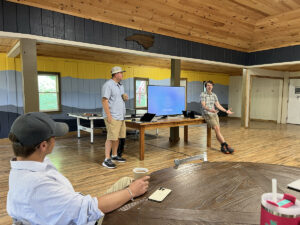
School that doesn’t stop. Students attend Bearwallow Academy, BlueRock’s on-site school, with in-person instruction from North Carolina-licensed teachers. Classes typically have no more than eight students. The team coordinates credit transfer with your home district, supports IEP and 504 accommodations, and offers vocational electives. Teachers and therapists share goals, so a win in the classroom gets reinforced in therapy, and vice versa.
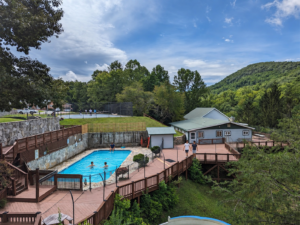
A campus built with intention. Dorms, classrooms, clinical spaces, dining, and recreation each have their own buildings on BlueRock’s mountain campus. Students spend real time outdoors: on the basketball court, by the pond, and on hiking trails. Personal phones stay home, with monitored computer access for schoolwork, so students can reconnect with their bodies, their peers, and themselves.
Families are part of the team. Parents take part in weekly family therapy and parent coaching, receive frequent updates, and are encouraged to visit campus. Healing lasts when families grow too.
Safety through structure. Trained staff are on site 24 hours a day, 7 days a week. All staff complete Nonviolent Crisis Intervention training, are certified in First Aid and CPR, and pass criminal background checks. Days are structured and predictable, with medication and wellness oversight, inside a home-like environment that balances accountability with belonging.
Time to actually change. BlueRock’s program is designed to be completed in 90 to 180 days, with each student’s length of stay tied to his clinical goals and academic progress.
Insurance families can actually use. BlueRock accepts NC Medicaid, including Standard and Tailored Plans, and is an established provider with Vaya Partners and Healthy Blue Care Together. For other managed care organizations and commercial plans, the team helps families pursue a Single Case Agreement.
Wondering if BlueRock is the right fit for your son? Call our admissions team at (828) 845-8454 for a brief screening, or start a referral online. We’ll help you figure out the right level of care, even if it isn’t us.
What Enrolling at BlueRock Looks Like
The enrollment process is designed to answer your questions and confirm fit before your son ever arrives:
- Submit a referral form and supporting documents.
- Talk by phone with a member of the admissions team.
- The clinical team reviews your teen’s history and records.
- Your teen completes a virtual interview with BlueRock team members.
- The team confirms insurance coverage.
- You schedule an enrollment date.
- You complete the enrollment paperwork.
After your referral and phone screening, you can schedule an on-site tour or a virtual walkthrough. Timelines vary with clinical needs, insurance, and availability, from a few days to several months, so it helps to reach out early.
Once on campus, students move through three phases: Trust, where strong relationships come first; Transformation, where evidence-based therapy and experiential learning create real change; and Transition, where students practice life skills and emotional regulation before heading home.
You Haven’t Waited Too Long
Many parents carry a quiet fear: Have we waited too long? The answer is almost always no. Teens are still growing, still forming, still capable of remarkable change when they’re given the right conditions: safety, structure, time, and adults who don’t give up on them.
Your son is not beyond help. And you don’t have to keep holding all of this alone.
Frequently Asked Questions
What’s the difference between a teen mental health facility and a psychiatric hospital? A psychiatric hospital provides short-term, acute care focused on immediate safety, while a residential mental health facility provides longer-term treatment in a structured, home-like setting. In North Carolina, Level II residential programs like BlueRock are community-based, while PRTFs and hospitals are more intensive, secure settings for stabilization.
How long do teens stay in residential treatment? It depends on the program and the teen. At BlueRock, the program is designed to be completed in 90 to 180 days, and each student’s length of stay is based on his clinical goals and academic progress.
Will my teen fall behind in school? Not if the program has a real school. Students at BlueRock attend Bearwallow Academy, an on-site school with NC-licensed teachers, and the team coordinates credit transfer and IEP/504 accommodations with your home district.
Does NC Medicaid cover residential mental health treatment for teens? It can, when the care is medically necessary. BlueRock accepts NC Medicaid, including Standard and Tailored Plans, handles the medical necessity paperwork, and coordinates with your care manager. Families need to keep Medicaid eligibility active throughout treatment.
Is a residential treatment center the same as a “mental institution”? No. Modern teen mental health facilities are licensed treatment programs with therapy, school, family involvement, and recreation. BlueRock is a relationship-based therapeutic community, not a hospital ward.
Can we visit our son during treatment? Yes. BlueRock encourages families to visit campus, and parents take part in weekly family therapy and parent coaching throughout the program.
What should I do if my teen is in crisis right now? If your teen is in immediate danger, call or text 988 or go to the nearest emergency room. Once your teen is safe, a residential program can help with the longer-term work.
Take the Next Step for Your Son
You’ve been carrying this a long time. BlueRock can help carry it with you. Call our admissions team at (828) 845-8454 to talk through what’s happening and find out whether BlueRock is the right fit. Or start a referral online today.
If you or your teen need help right now:
- SAMHSA National Helpline: 1-800-662-HELP (4357)
- 988 Suicide & Crisis Lifeline: Call or text 988
- Crisis Text Line: Text HOME to 741741