When you tour a teen residential treatment program, you are evaluating whether a place can hold your child safely, treat the real problem underneath the behavior, and keep them on track in school while they heal. The strongest visits go past the lobby. You watch how staff speak to the teens already living there, you ask how clinical care is structured, and you confirm the program is licensed and accredited. A good tour leaves you with specific answers about safety, therapy, family involvement, and academics, not a glossy brochure. This guide walks you through exactly what to look for, room by room and question by question.
Key Takeaways
- A meaningful tour shows you the clinical model, the daily structure, and the on-site school, not just the dorms and grounds.
- Verify licensing and accreditation in person. Ask whether the program is state-licensed and CARF accredited.
- Watch how staff interact with the teens already enrolled. Calm, respectful, and consistent matters more than any amenity.
- Ask how the program treats the root issue. For most teens, behavior is a symptom of anxiety, trauma, or emotional dysregulation rather than the core problem.
- Confirm that academics continue on site so your teen does not fall behind while in treatment.
Why Touring a Teen Residential Program Matters
By the time most parents schedule a tour, they are exhausted. You have likely tried outpatient therapy, school counselors, and maybe a short hospital stay, and you are scared you are running out of options. That fear is valid, and it is also a reason to slow down for the visit. Residential treatment is a significant decision, and a tour is your best chance to see whether a program’s promises match what actually happens inside the buildings.
Adolescent mental health struggles are common, which means programs vary widely in quality and approach. According to the Centers for Disease Control and Prevention, an estimated 11% of children ages 3 to 17 had current diagnosed anxiety and 8% had a diagnosed behavior disorder based on 2022 to 2023 data. The National Institute of Mental Health notes that for a young person with symptoms of a mental disorder, the earlier treatment is started, the more effective it can be, which is one reason families look at residential care when less intensive support has not held. A tour helps you separate marketing from method so you can choose with confidence rather than panic.
What to Look for Before You Arrive
Some of the most useful evaluation happens before you walk through the door. Confirm the basics so your in-person time goes toward the questions only a visit can answer.
Licensing and Accreditation
Ask whether the program is licensed by the state and accredited by an independent body. In North Carolina, residential programs for youth are licensed through the state and may be certified at a specific level of care. CARF International, an independent nonprofit accreditor of health and human services, is one widely recognized standard, and accreditation signals that an outside reviewer has examined the program’s clinical and safety practices. BlueRock Behavioral Health is CARF accredited and licensed by the North Carolina Department of Health and Human Services.
Level of Care and Who the Program Serves
Programs are built for different needs, so confirm the fit before you visit. The American Society of Addiction Medicine publishes widely used criteria that describe levels of care, and a quality program can tell you exactly which level it provides and which teens it is designed to help. BlueRock is a North Carolina Medicaid Level II residential program serving adolescent males ages 14 to 17. Knowing the age range, gender, and clinical scope up front saves everyone a wasted trip.
What to Watch During the Tour Itself
Once you are on campus, your attention is the most valuable tool you have. Brochures describe intentions. A tour shows you reality.
How Staff Interact With the Teens Already There
Watch the unscripted moments. Are staff calm and respectful when a student is having a hard time? Do the teens seem to know the adults and trust them, or do they go quiet and tense when staff walk by? A therapeutic community runs on relationship, and the National Institute of Mental Health emphasizes that supportive, consistent care helps young people recover. You are looking for warmth with structure underneath it, not control for its own sake.
The Physical Environment and How Space Is Used
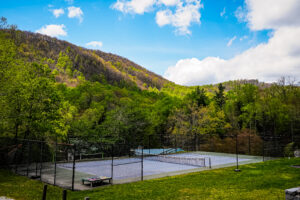
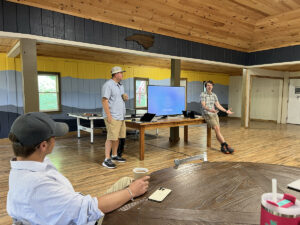
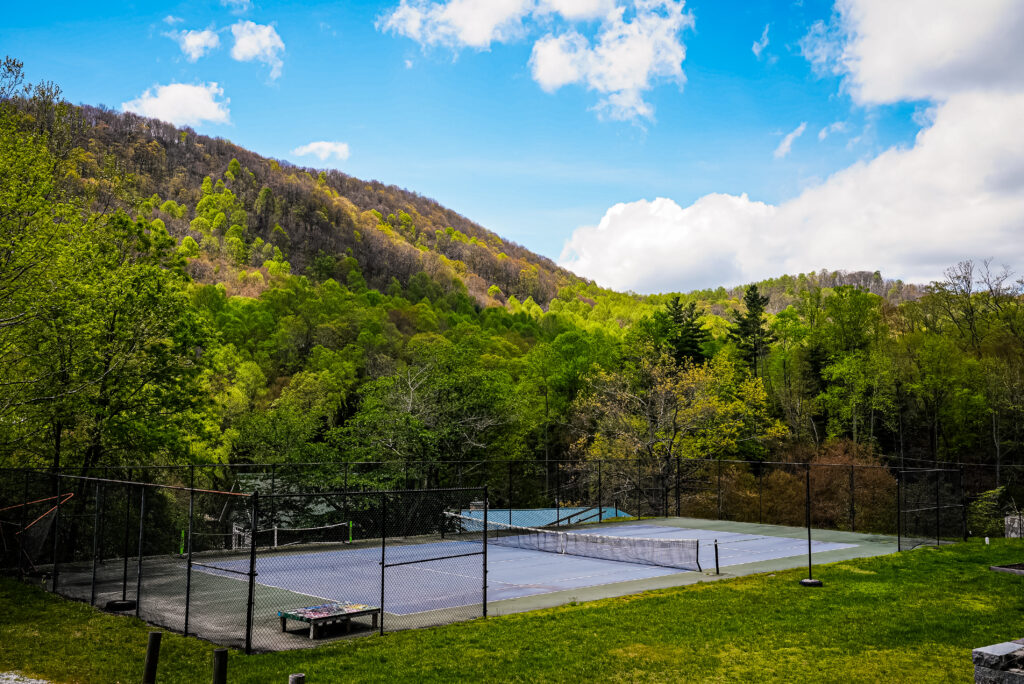
Notice how the campus is organized. At a program built around structure, separate spaces for sleeping, learning, clinical work, dining, and recreation help a teen’s day feel predictable and contained. BlueRock sits in the Blue Ridge foothills of Western North Carolina, with distinct buildings for dorms, academics, clinical sessions, dining, and recreation so that students move through a clear, consistent daily rhythm. Room to be outdoors and away from screens is part of how a campus supports regulation, so ask how the grounds are used during a typical day.
Safety Without a Correctional Feel
Safety and warmth are not in tension. Ask how the program keeps students safe and how it responds when a teen is in crisis. A strong answer describes supervision, clear routines, and trained staff who de-escalate rather than punish. You want a place where structure creates safety and a teen can settle, not a setting that feels like a lockdown.
The Questions That Reveal the Most
The right questions turn a polite walk-through into a real evaluation. These get past the script.
How Does the Program Treat the Root Issue?
For most teens who land in residential care, the visible behavior is a symptom. Underneath it is often anxiety, trauma, or difficulty regulating emotion. Ask what clinical model the program uses and how clinicians get at the cause rather than only managing the surface. BlueRock uses trauma-informed, attachment-based care, including approaches such as EMDR and trauma-focused cognitive behavioral therapy. The CDC notes that early diagnosis and access to services can make a difference for children with mental health conditions, and it points to evidence-based approaches like cognitive behavioral therapy and behavior therapy.
How Is the Family Involved?
Healing happens in relationship, including the relationship between a teen and their family. Ask how often you will be included, what family therapy looks like, and how the program coaches parents to hold what they could not hold alone before. BlueRock provides family therapy and parent coaching as part of treatment, so the work a teen does on campus has a place to land at home.
What Happens With School?
This is the practical fear underneath the emotional one, and it deserves a direct answer. A program that takes academics seriously has an accredited school on site with real teachers, not a worksheet binder. BlueRock students attend Bearwallow Academy, an accredited on-campus school where classes are taught in person and aligned to North Carolina requirements, and the academic team coordinates with each student’s home district so earned credits transfer cleanly. We cover how this works in more depth in our guide on credit transfer and graduation planning after residential treatment.
Red Flags to Notice on a Tour
A few signals are worth treating as warnings. Be cautious if a program guarantees a specific outcome, because no responsible provider promises that a teen “will” be cured. Be cautious if staff cannot clearly describe the clinical model or who reviews their care. Be wary if the visit is all amenities and no clinicians, or if no one will let you see the school or talk about academics. Trust your read of how the enrolled teens seem. A polished campus cannot make up for a tense, disconnected environment.
Frequently Asked Questions
What Should I Ask When Touring a Teen Residential Program?
Ask about licensing and accreditation, the clinical model, how the program treats the root issue, family involvement, safety procedures, and how academics continue on site. Also ask to see the school and to observe a normal part of the day. The answers to those questions tell you more than any amenity.
How Long Does Teen Residential Treatment Last?
Length of stay depends on the teen’s needs and clinical progress rather than a fixed number of days. Longer-term residential programs are designed to give a teen enough time, structure, and therapeutic depth to make changes that shorter stays often cannot. Ask the program how they decide when a student is ready to step down, and how they plan for the transition home.
Will My Teen Fall Behind in School During Treatment?
A teen does not have to fall behind when the program runs an accredited school on site. At BlueRock, students attend Bearwallow Academy, where in-person teachers deliver core academics aligned to North Carolina requirements and the team coordinates with the home district so credits transfer back. Ask any program you tour how it keeps students current and how it documents earned credits.
Is Residential Treatment the Same as a Lockdown Facility?
No. A therapeutic residential program uses structure and supervision to create safety, not confinement for its own sake. The goal is a predictable, contained environment where a teen can regulate and do clinical work. On a tour, ask directly how the program keeps students safe and how staff respond during a crisis.
Does Medicaid Cover Teen Residential Treatment in North Carolina?
Many North Carolina families use Medicaid to access residential treatment for their teen. BlueRock accepts NC Medicaid, including Standard and Tailored Plans. Verify your specific coverage with the program’s admissions team before you enroll.
What Is a Level II Residential Program?
In North Carolina, a Level II residential program is a state-recognized therapeutic living environment for youth that provides structured, supervised care with clinical services. The American Society of Addiction Medicine criteria describe levels of care more broadly, and a program should be able to explain exactly what its level includes. Ask the program to walk you through what their Level II certification means for daily structure and clinical support.
Touring BlueRock Behavioral Health
If you are weighing residential treatment for your teenage son, we welcome your questions and your visit. BlueRock Behavioral Health is a CARF accredited, North Carolina Medicaid Level II residential program for adolescent males ages 14 to 17, set in the Blue Ridge foothills of Western North Carolina at 41 Heros Way, Hendersonville, NC 28792. You can see the campus, meet members of the clinical team, and learn how Bearwallow Academy keeps your son on track in school. Call us at (828) 845-8454 to ask questions or schedule a tour. No child is beyond help, and the cycle of treatment that did not hold can be broken with enough time, structure, and support.
Crisis and Emergency Resources
If you or someone you know is in a substance use or mental health crisis, help is available now. Contact the SAMHSA National Helpline at 1-800-662-HELP (4357) for free, confidential treatment referrals 24/7. Reach the 988 Suicide and Crisis Lifeline by calling or texting 988. The Crisis Text Line is available by texting HOME to 741741. For emergencies, call 911.
Learn More
For trustworthy background on adolescent mental health and treatment, see the National Institute of Mental Health overview of child and adolescent mental health, the Centers for Disease Control and Prevention data on children’s mental health, and the American Society of Addiction Medicine explanation of levels of care. For accreditation standards, visit CARF International.