Your house feels like a combat zone, or it may be in a cold, silent room with your thoughts racing through your brain. You are wondering how you can get your teenager to agree to go to treatment, but you don’t want to make things worse than they already are.
You have probably tried school counselors, weekly therapy sessions your teen skips or sits in silence. It takes a toll on your mental health. You’re exhausted. It’s a terrifying thought about spending a night in the emergency room.
You want your child back, but right now the person living in their room feels like a stranger who meets every offer of help with a door slam or a sharp “I’m fine, just leave me alone.”
To get a teenager to agree to rehab or residential treatment, you have to stop viewing the conversation as a negotiation for compliance and start seeing it as an invitation to safety. Success comes when you validate their pain without validating their self-destructive choices. This requires moving away from ultimatums and toward a collaborative approach that acknowledges their fear while holding firm on the reality that the current situation is unsustainable.
At BlueRock Behavioral Health in Hendersonville, North Carolina, your teen can get the help they need while not falling behind at school.
Key Takeaways
- Resistance is a shield. Most teenagers refuse treatment because they are terrified of losing control, not because they want to stay miserable.
- Neutral timing is everything. Never bring up residential treatment during an active blowout; wait for a “cool” moment when defenses are lower.
- Specifics reduce anxiety. Describing a campus like BlueRock, which sits on 140 acres in the Blue Ridge foothills, makes the idea of “treatment” feel less like an institution and more like a place.
- Safety is non-negotiable. If your child is at immediate risk, your role as a parent shifts from collaborator to protector.
Why Teenagers Push Back on Treatment (And What It Actually Means)
When your teen screams that they hate you for suggesting a program, it is easy to take it at face value. It feels like defiance. However, in the world of adolescent mental health, defiance is almost always a secondary emotion. Underneath the anger is usually a profound sense of shame or a paralyzing fear of the unknown.
Resistance Is Communication, Not Defiance
Think about what you are asking them to do. You are asking them to leave their friends, their phone, their bed, and their “coping mechanisms,” even if those mechanisms are substances or self-harm, and move to a place where they will have to talk about things they have spent months trying to forget. According to SAMHSA’s National Survey on Drug Use and Health, nearly 20% of adolescents experience a major depressive episode, yet many resist care because the stigma of being broken feels worse than the depression itself.
When they say they aren’t going, they are often saying they are scared they will never be normal or they are scared you are giving up on them.
What Fear Sounds Like When It Comes Out as Anger
In our clinical experience in Western North Carolina, we see this daily. A student arrives at our Hendersonville campus with their guard up high. They use anger to keep people at a distance because if they let you get close, they might have to admit how much they are hurting.
If your teen is using substances or struggling with emotional disregulation, their brain is currently wired for survival. They aren’t thinking about long-term success or their GPA at Bearwallow Academy. They are thinking about how to get through the next hour without feeling overwhelmed. Treatment feels like a threat to that survival.
Is It Time for Residential Care? A Quick Self-Check
If you aren’t sure if your teen’s behavior has crossed the line from typical adolescent rebellion to a clinical crisis, ask yourself these questions:
- Has their performance in school plummeted or have they stopped going entirely?
- Are they withdrawing from family and long-term friends to spend time with a new, potentially high-risk peer group?
- Have you discovered evidence of substance use, self-harm, or recurring mentions of hopelessness?
- Do you feel like you are walking on eggshells in your own home to avoid a physical or verbal outburst?
- Have outpatient therapy and school-based interventions failed to produce lasting change?
If you answered “yes” to three or more of these, the structure of a residential community may be your best bet to break the cycle.
Not ready for a call? Fill out our intake form on our contact us page where you can verify your insurance.
What Not to Say and Why It Backfires
Most parents, driven by a desperate desire to help, fall into a few common traps. These are born out of love, but they usually result in the teen digging their heels in further.
The Ultimatum Trap
“If you don’t go, you’re out of the house,” or “If you don’t do this, we’re taking away everything you own”. While boundaries are essential, ultimatums delivered in the heat of an argument rarely work. They trigger the fight or flight response. Your teen stops hearing your concern and starts focusing on how to win the power struggle. In an attachment-based model of care, we recognize that the relationship is the most powerful tool for change. When you use an ultimatum, you temporarily sever that attachment, making the teen feel like they have to protect themselves from you.
Avoiding Shame-Based Language
Phrases like “Why can’t you just be normal?” or “Look what you’re doing to this family” carry a heavy weight of shame. Most at-risk youth are already drowning in shame. Adding more does not motivate them to change; it confirms their belief that they are a problem child or a failure. Instead of focusing on what they are doing to the family, focus on what the current situation is doing to them.
How to Start a Treatment Conversation Without Shutting It Down
The goal of this conversation is not to get them to pack their bags immediately. The goal is to plant the seed that change is coming and that you are doing this with them, not to them.
Timing and Setting Matter More Than You Think
Do not have this conversation at 11:00 PM when everyone is tired. Do not do it right after a fight. Find a neutral time, perhaps during a drive or a quiet Saturday morning. Being in a car can actually be helpful because it removes the pressure of direct, sustained eye contact, which many struggling adolescents find confrontational.
Words and Phrases That Open Doors
Try using “I” statements that focus on your observations and feelings:
- “I’ve noticed how much weight you seem to be carrying lately, and it hurts me to see you struggling like this”.
- “It feels like our home isn’t a peaceful place for you right now, and I want to help us find a way back to that”.
- “We’ve tried outpatient therapy, and it hasn’t given you the relief you deserve. I think we need a higher level of support”.
If you are not sure whether your teenager needs residential care, our admissions team offers confidential conversations for families who are still figuring that out. No pressure, no commitment.
When Your Teen Refuses Entirely: What Parents Can Do
It is the fear of every parent: what if I say all the right things and they still say no?
When It’s Safe to Wait and When It Isn’t
There is a difference between a teen who is depressed and unmotivated and a teen who is in active, life-threatening danger. If there is active substance use, significant self-harm, or threats of violence, the luxury of waiting for agreement may not exist. As a parent, you have the legal and moral authority to ensure your child’s safety. In North Carolina, parents can enroll a minor in treatment, though the process is much smoother when the teen feels heard.
Teen Treatment in North Carolina
Sometimes you are the wrong messenger. A teen might reject a suggestion from a parent simply because it came from a parent. Involving a neutral third party, such as a trusted therapist or an admissions counselor from a program like BlueRock, can change the dynamic. We often speak with families long before a student enrolls, helping them navigate the logistics of Medicaid Level II certification or commercial insurance coverage.
Residential Treatment For Teens NC
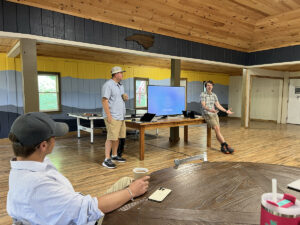
Residential treatment often gets a bad rap because people confuse it with lockdown facilities or boot camps. At BlueRock, we operate as a therapeutic community. Our 140-acre campus in the Blue Ridge foothills near Hendersonville is designed to feel like a campus, not an institution.
Comparing Levels of Care
| Feature | Outpatient (OP) | Partial Hospitalization (PHP) | Residential Treatment (RTC) |
| Duration | 1 to 3 hours per week | 6 hours per day | 24/7 care for 3 to 6 months |
| Living Arrangement | Lives at home | Lives at home or sober living | Lives on-campus |
| Schooling | Regular school | Often missed or tutoring | On-site accredited academy |
| Best For | Mild symptoms | Moderate instability | Chronic or severe crisis |
Why Structure and Safety Change the Equation
The reason short stays, like 7-day hospitalizations, often fail is that they only stabilize the crisis; they do not treat the underlying trauma or attachment issues. Healing takes time. By staying for 3 to 6 months, students at BlueRock can actually dig into the work.
They have separate buildings for their dorms, their clinical sessions, and their recreation. They attend Bearwallow Academy on-site, so they do not fall behind their peers in Western NC schools. This continuity of education is often the hook that helps a teenager agree to go. They realize they won’t lose a year of their life; they will just spend a few months in a different, more supportive classroom.
Enrollment at BlueRock Behavioral Health
We believe that high-caliber clinical care should not be reserved for the wealthy. Whether your family is on Medicaid or has commercial insurance, we provide a level of trauma-informed, attachment-based care that is rare at this price point. Our goal is to break the cycle of failed treatments and provide a place where your teen can finally breathe.
Frequently Asked Questions
Can a parent force a teenager to go to a residential treatment program?
In most states, including North Carolina, parents have the legal authority to enroll a minor (under 18) in a residential treatment center without the minor’s consent. However, the therapeutic process is far more effective when the teen eventually becomes a willing participant in their own recovery.
What do I do if my teen refuses to go to therapy or rehab?
Start by identifying the specific fear behind the refusal. Is it school? Friends? Fear of being locked up? Address those specifics. If the situation is a safety emergency, you may need to involve professional transport services or go directly to an intake facility.
How do I know if my teenager needs residential treatment or outpatient therapy?
If outpatient therapy has been tried for several months without improvement, or if the teen’s behavior is consistently dangerous to themselves or others, residential treatment is likely the next appropriate step.
Will sending my child to a residential program damage our relationship?
While there may be short-term anger, most families find that the breathing room provided by residential care actually saves the relationship. It moves the parent out of the policeman role and back into the parent role, while the facility handles the clinical structure.
How long does teen residential treatment usually last?
At BlueRock, our programs typically last between 3 and 6 months. This duration allows for deep-seated behavioral changes and the healing of family dynamics.
Does residential treatment for teens cover schoolwork so they don’t fall behind?
Yes. Our on-site school, Bearwallow Academy, is accredited. We work with your child’s home school to ensure credits transfer and they stay on track for graduation.
What if my teenager agrees to go but then wants to leave?
It is very common for students to have buyer’s remorse in the first two weeks. Our clinical team is trained to handle this testing phase, focusing on the attachment and safety that keeps them engaged until the therapeutic work begins to take hold.
Does BlueRock Behavioral Health accept Medicaid for adolescent treatment?
Yes. We are North Carolina Medicaid Level II certified. We also work with many commercial insurance providers to make our 140-acre residential campus accessible to as many families as possible.
If you are tired of living in a state of constant alarm, let’s talk. Your child is not beyond help, and you do not have to do this alone. Our Hendersonville campus is a place where transformation happens every day, grounded in structure, nature, and real clinical depth.
Reach out to our admissions team today to learn more about enrolling your student at BlueRock.
Start Your Child’s Treatment in North Carolina Today
Call our admissions team at (828) 845-8454 to learn more about what daily life will look like for your child.
BlueRock Behavioral Health is located at 41 Heroes Way, Hendersonville, North Carolina.
Helpful Resources
- Recovery Research Institute: The Sweet Spot
- National Institute of Health: Therapeutic Residential Care
- Office of Juvenile Justice and Delinquency Prevention: Residential Treatment Center Review
- Mental Health America: Residential Treatment
- SAMHSA National Helpline: 1-800-662-HELP (4357)
- National Suicide Prevention Lifeline: 988
- Crisis Text Line